The Mystery of the Channan Kata
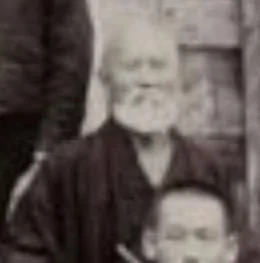
Itosu Anko (1831-1915)
For those who train in karate that stems from Itosu Anko (1831-1915), the Channan kata have been a topic of mystery and contentious debate for generations. It is not uncommon for karateka to seek out the oldest, most “original” versions of kata and training methods they can find, and for those who practice the Pinan/Heian kata, this inevitably leads them to Channan. Very little documentation survives regarding these kata, which leaves room for both the misinformed and the deceitful to capitalize on the knowledge vacuum to spread their pet theories. This article will be addressing the facts, as they currently stand, as well as some of the claims that have been made over the years regarding Channan.
WHAT IS CHANNAN?
According to oral histories in most modern karate lineages which stem from Itosu Anko, the five Pinan kata (called “Heian” in Japanese styles) were created by Itosu, and were derived from pre-existing koryu kata (old style forms), primarily Kusanku, although examples of material from Passai and Chinto are also clearly present. Where Channan—a name which is sometimes attributed to a shipwrecked Chinese martial artist, although there seems to be no evidence to support this, and it is a common claim for many kata—comes into play is in several historical references, after Itosu passed away, which connect it to the Pinan kata and various martial artists in Okinawan karate history. In the book, Karate no Kenkyu (Study of Karate) by Nakasone Genwa (1895-1978), published in 1934 (19 years after Itosu’s death), there is an anecdote from Motobu Choki (1870-1944), who trained with Itosu in his youth, where he mentions Channan:
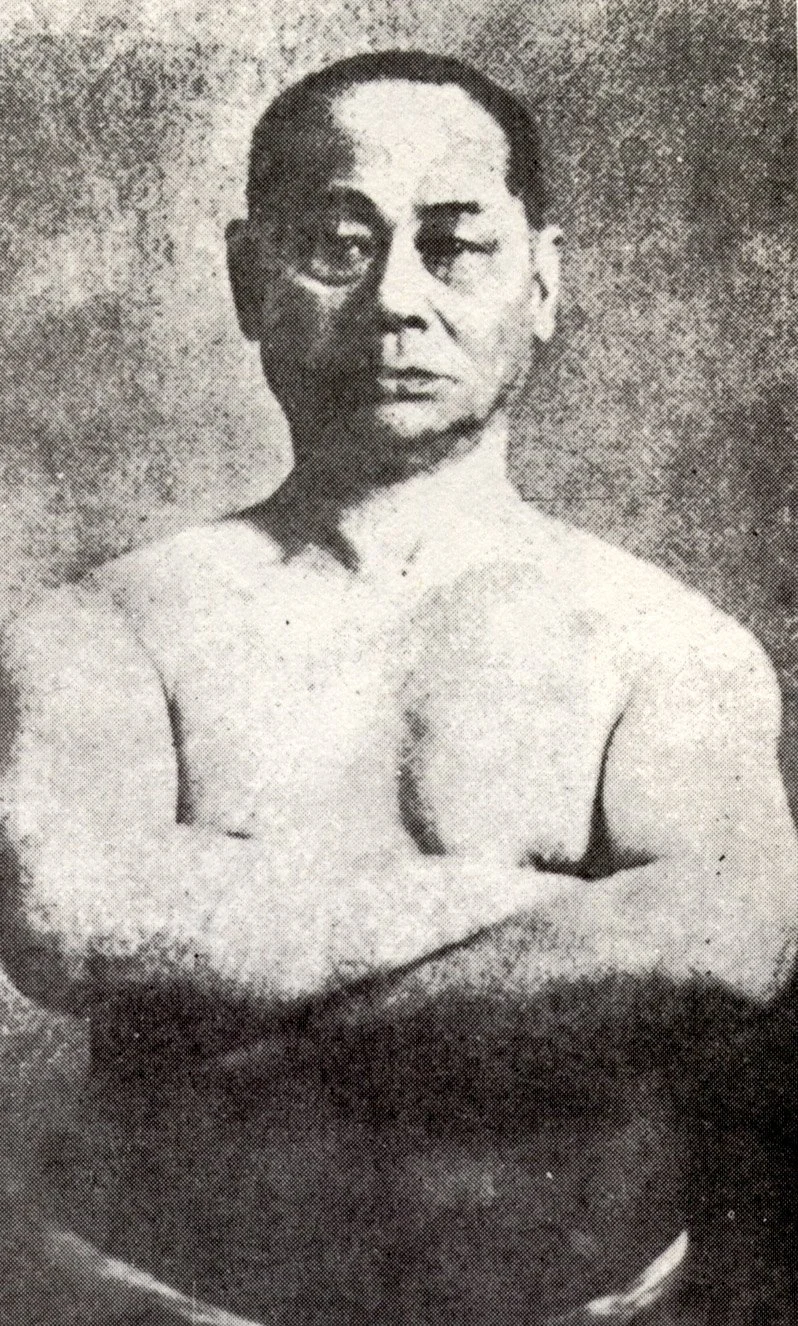
Motobu Choki (1870-1944)
I visited him one day at his home near the school, where we sat talking about the martial arts and current affairs. While I was there, 2-3 students also dropped by and sat talking with us. Itosu Sensei turned to the students and said ‘show us a kata.’
The kata that they performed was very similar to the Channan kata that I knew, but there were some differences also. Upon asking the student what the kata was, he replied ‘It is Pinan no Kata.’
The students left shortly after that, upon which I turned to Itosu Sensei and said ‘I learned a kata called Channan, but the kata that those students just performed now was different. What is going on?’
Itosu Sensei replied ‘Yes, the kata is slightly different, but the kata that you just saw is the kata that I have decided upon. The students all told me that the name Pinan is better, so I went along with the opinions of the young people.’
Obviously, this tells us that Motobu learned the Channan kata, at some point in his training, prior to Itosu’s death. It also tells us that Itosu taught Channan, but made some alterations to it and changed the name to Pinan. This does not confirm that Motobu learned Channan from Itosu, but it does seem like a reasonable conclusion to draw. We find another reference to Channan in the 1938 book, Kobo Kenpo Karatedo Nyumon (Introduction to Offensive and Defensive Kenpo Karatedo), written by Shito-Ryu founder, Mabuni Kenwa (1889-1952), and Nakasone Genwa, which simply stated (according to Joe Swift’s translation) that those who learned the Pinan kata as “Channan” still referred to the kata by that name. In 1956, Kinjo Hiroshi (1919-2011), who trained under multiple students of Itosu Anko, wrote in Gekkan Karatedo magazine that the Pinan kata were originally called “Channan,” and that there were some technical differences, but the “updated” versions of Channan were called Pinan. Between all of these references, it certainly seems as though the Pinan kata are, in fact, simply updated versions of Channan. What this does not tell us is the origin of Channan, although the fact that all of Itosu’s students taught that Itosu developed the Pinan kata does suggest that he was likely the originator of Channan, as well. The ambiguity surrounding this subject has led to a number of theories.
THE SHIROKUMA THEORY
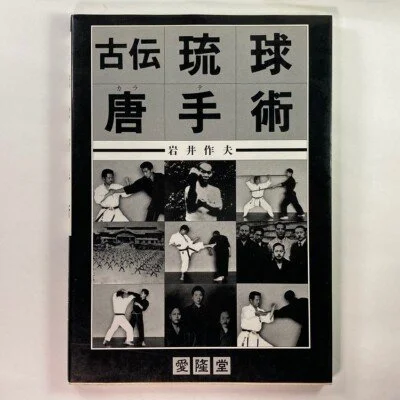
The cover of Iwai Tsukuo’s 1992 book, Koden Ryukyu Karate-Jutsu
Iwai Tsukuo, a karate historian and student of Motobu Chosei (Motobu Choki’s son), wrote a letter in 1997 stating that Shiraguma no Kata—which seems to be an alternate reading of Shirokuma no Kata (Form of the White Bear), which is how the name of this kata is written, today—is the kata formerly known as Channan. This kata is not publicly shown, or taught outside of the Motobu-Ryu Kenpo lineage, so it is difficult to make any independent attempt to verify this based on appearance. Motobu Naoki (Motobu Choki’s grandson), also does not confirm Iwai’s statement, instead, only going so far as saying that Shirokuma is very similar to Pinan Nidan, and therefore might possibly be Channan, which his grandfather stated was the old name of the Pinan kata. Given that Choki stated he learned Channan, and recognized the Pinan kata he saw Itosu’s students demonstrate as such, it stands to reason that Shirokuma could be the older version of Pinan Nidan that he learned when it was still called Channan, or could at least be based on it. What this doesn’t explain is why Motobu Choki would have changed the name of the kata. If Shirokuma is Channan, then why not simply continue to call it Channan? Choki did not see fit to rename any of the other kata he taught, so it does seem strange that he would change this one. If he made changes to Channan that he thought were significant enough, perhaps that would warrant a new name, but until the Motobu family decides to show Shirokuma publicly, or releases documents which discuss the origin of the kata, this is largely conjecture.
THE YOSHIMURA THEORY
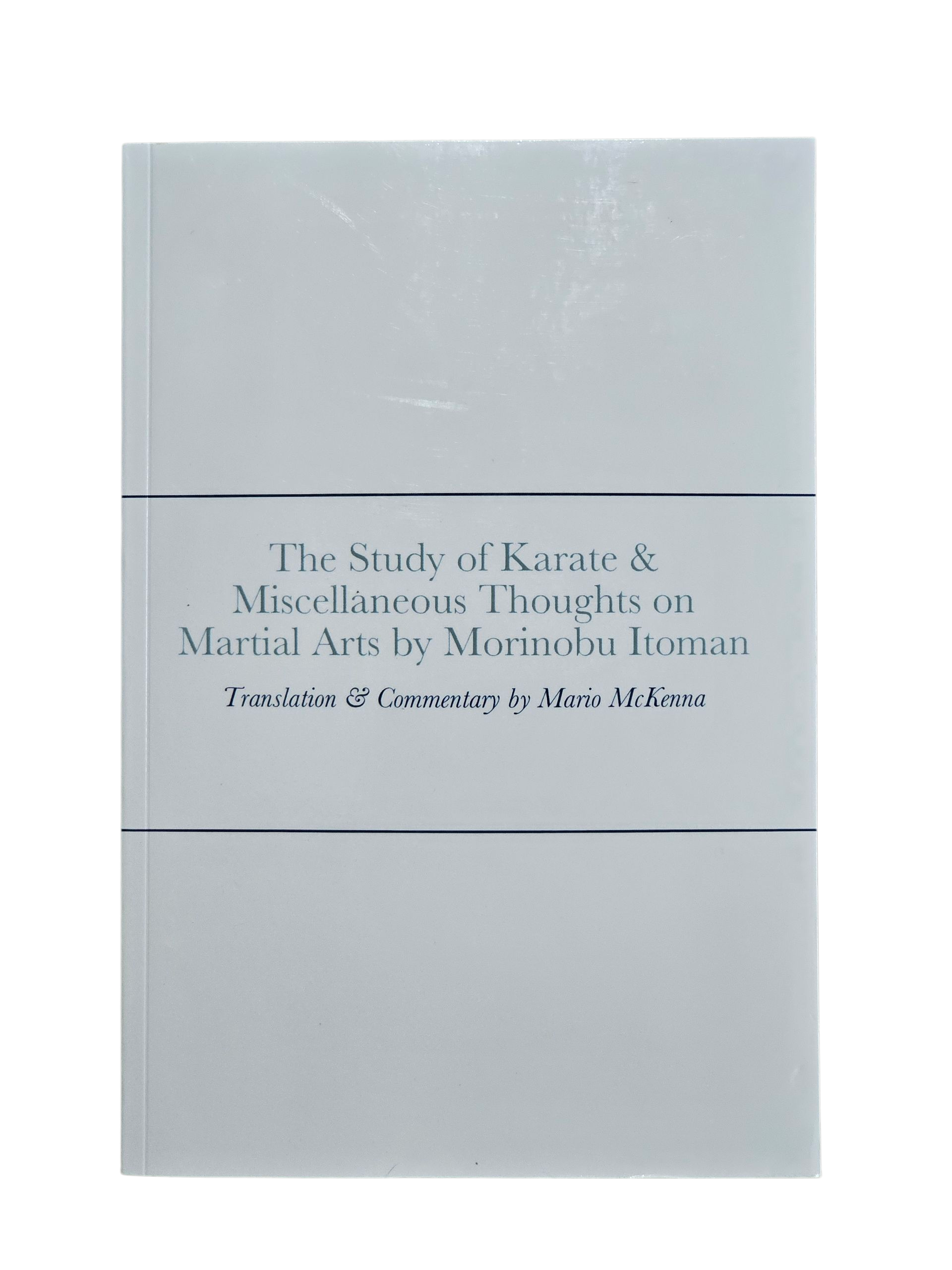
Mario McKenna’s translation and commentary on Itoman Morinobu’s 1934 book, Toudi-jutsu no Kenkyu, and other collected works
In 1934, Itoman Morinobu, an Okinawan police officer and martial artist who also traveled to China, Taiwan, and Korea on his martial arts journey, published Toudi-jutsu no Kenkyu (Study of China Hand Techniques), which features a list of “offensive and defensive kata,” where we find both Pinan and Channan listed. The Pinan kata are simply listed as “Pinan Shodan, Nidan, Sandan, Yondan, Godan,” while Channan is listed as “Yoshimura-shi Channan,” meaning “Mr. Yoshimura’s Channan.” This is the oldest written record that we have attributing a person’s name to the Channan kata, but we also find “Yoshimura no Channan,” meaning “Channan of Yoshimura,” in later works by Sakagami Ryusho (Karatedo Kata Taikan, 1978) and Miyagi Tokumasa (Karate no Rekishi, 1987), although this could simply be because they took the name from Itoman’s book. This led some to theorize that Channan was created by someone with the surname of Yoshimura, but it should be noted that these kata lists feature other kata attributed to people, and does not actually indicate that those people created those kata. For example, Itoman’s list includes Mr. Iha’s Seisan, Mr. Kyan’s Seisan, Mr. Kyan’s Useishi, Mr. Itosu’s Useishi, Mr. Tawada’s Passai, Mr. Motobu’s Sochin, Mr. Aragaki’s Sochin, and Mr. Hanashiro’s Kururunfa. Of these, only Aragaki’s Sochin—likely referring to Aragaki Seisho (1840-1918)—is even a possible contender for a kata being attributed to its creator, and even that kata is believed to have been imported from China, rather than actually being Aragaki Seisho’s creation. In truth, these lists of kata with name attributions seem to only signify that the given people passed on unique versions of those kata, not that they created those kata.
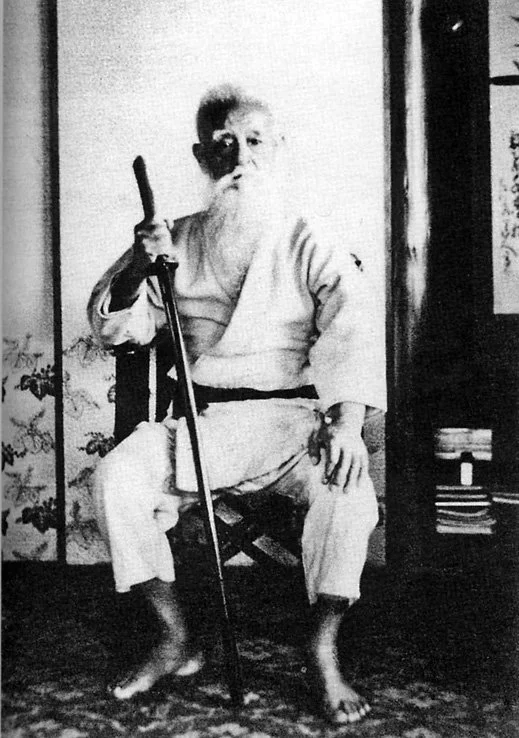
Yoshimura Chogi (1866-1945)
All that said, what if we assume that a person named Yoshimura did, in fact, create the Channan kata, which Itosu would later learn, modify, and rename as Pinan? Who could this Yoshimura possibly be? One theory is that the person this could refer to was Yoshimura Chogi (1866-1945), who began his training at the age of 11 or 12 under a man named Ishimine (who may have been a student of “Bushi” Matsumura Sokon (1809-1899)), and supposedly went on to train under Matsumura Sokon, himself, when he was 17 or 18, as well as Higashionna Kanryo (1853-1915) when he was 22 or 23, though in his later years it seems he was more well-known for his bojutsu (staff techniques) and kenjutsu (sword techniques) than his karate. Given that Chogi was born in 1866, when Itosu Anko was already 35 years old and well into his martial arts career, it seems highly unlikely that Chogi, who wouldn’t even begin training in martial arts until 1877 or 1878, would have been the one responsible for creating Channan and teaching it to Itosu. Additionally, Motobu Choki, who spoke to Itosu of learning Channan, began his training with Itosu around 1882, when Yoshimura Chogi was 16 years old, and would only train with Itosu for 7 or 8 years. If Motobu learned Channan from Itosu—which does seem likely—then the theory that Yoshimura Chogi created Channan would mean that he developed these kata and passed them on to an instructor 35 years his senior before he turned 24 years old, himself. While this could technically be possible, it is highly improbable.
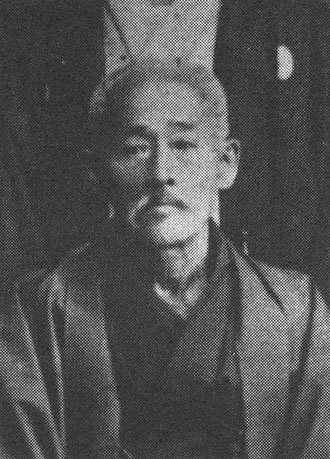
Higashionna (Higaonna) Kanryo (1853-1915)
Another notable consideration with regard to this theory is that we also have a brief autobiography that Yoshimura Chogi wrote for a 1941 issue of the magazine, Monthly Bunka Okinawa, which has been translated into English by Joe Swift and Motobu Naoki. This autobiography mentions several kata that Yoshimura Chogi learned—Naihanchi and Passai under Ishimine, Gojushiho and Kusanku under Matsumura, and Sanchin and Pechurin under Higashionna—but at no point does it mention Channan. Given that he does not seem to have trained with Itosu, and does not mention learning or creating Channan in his autobiography, it would seem reasonable to assume that the “Yoshimura-shi Channan,” in Itoman’s book likely does not refer to Yoshimura Chogi. There also does not seem to be any evidence that Yoshimura Chogi actually taught martial arts, at all, which could also rule him out as having even passed on a unique version of Channan he picked up from Itosu or one of Itosu’s students. Unfortunately, that does not leave us with many other options to consider for who the Yoshimura referenced by Itoman, Sakagami, and Miyagi might have been. Chogi had a lesser-known older brother, Yoshimura Choshin, who also supposedly trained under Matsumura, as well as a man named Oyadomari (likely, Oyadomari Kokan (1827-1905), as Chogi stated that he was about the same age as Itosu), but Choshin was only 3 years older than Chogi, so it is also unlikely that he would have created Channan and taught it to Itosu. Their father, Yoshimura Chomei, accompanied Higashionna Kanryo to China, and was said to have highly valued martial arts in Chogi’s autobiography, but we have no documentation suggesting that he ever actually trained in martial arts, himself, so it is also unlikely that he would have created Channan and taught them to Itosu.
THE SHUDOKAN SECRET THEORY
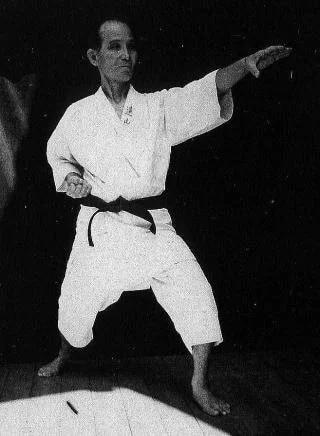
Toyama Kanken (1888-1966)
Toyama Kanken (1888-1966), founder of the Shudokan, was a student of Itosu Anko, along with some other notable instructors, such as Higashionna Kanryo. He began his training with Itosu in 1897 at the age of 9, prior to Itosu’s introduction of karate to the Okinawan school system, and continued training with him until his death in 1915. It is notable that Toyama began training with Itosu 7 or 8 years after Motobu Choki had stopped training with him, and just 4 years before Itosu would introduce karate into the Okinawan school system, meaning that it is more likely for Toyama to have learned the Pinan kata, rather than the older version that Motobu learned as Channan, although it is possible that he was training with Itosu during a transition period and may have learned Channan, only to change the name at Itosu’s behest. What we can say, for certain, is that Toyama passed on Itosu’s Pinan kata, which we still see in the curricula of those whose karate lineage traces back to him. Toyama moved to Taiwan in 1924, where he trained in chuan fa (kung fu) for approximately 6 years, and then to mainland Japan in 1930 where he opened his Shudokan dojo in 1932, and taught karate and chuan fa, seemingly as a blended curriculum. It is theoretically possible that Toyama could have learned Channan in Taiwan, completely independent of Itosu, but there does not seem to be documentation to support that. In 1956, he published the book, Okugi Hijutsu Karate-Do (Secret Techniqes and Art of Karate-Do), which included photos of him demonstrating Naihanchi Shodan and Gojushiho, but not Channan. In 1964, he published the book, Karatedo Dai Hokan (Karatedo Great Treasure Book), in which he and his students demonstrated the five Pinan kata, the three Naihanchi kata, Passai Dai, Chibana no Kusanku, Chinto, and Ohgi Koryu Gojushiho (Useishi). Notably, Pinan is featured, and Channan is absent.
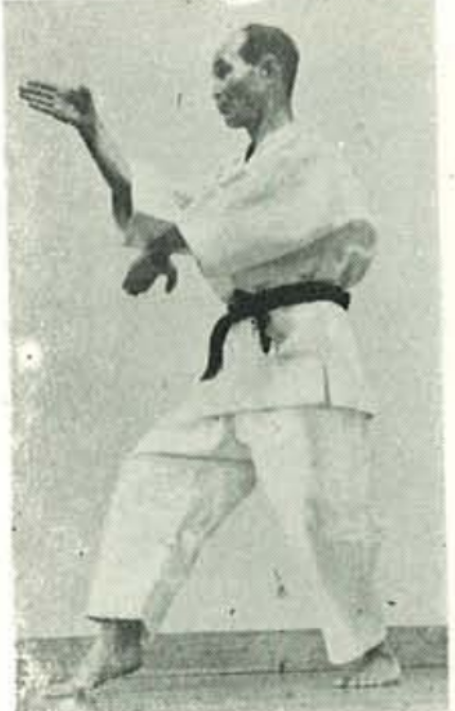
Toyama Kanken performing Gojushiho in Okugi Hijutsu Karate-Do
For better or worse, Toyama was not a believer in “styles” of karate, going so far as to say that his “style” would die with him, and encouraged his students to evolve, add-to, and blend the art he taught them with material from many different sources. This means that we do not have a clear delineation of kata passed down from sensei to student in his lineage, and there is little consistency between the dojo curricula passed down by his students, aside from the base set of 12 kata shown in his 1964 book. The Doshinkan, founded by Ichikawa Isao (1935-1996), is one such dojo, claiming to teach over 100 kata, including, according to some, the “long lost” Channan kata, which is being described as a kata roughly four times longer than Kusanku, more complex than Kusanku, and more “Chinese” in movement than most modern karate kata. This is, of course, quite difficult to verify, since there is no publicly available footage of this Channan. Ichikawa began training with Toyama in 1941—a year into Japan’s World War 2 military campaign—at the age of 6, and would go on to become the last uchi-deshi (live-in student) of Toyama, making him one of the youngest students of Toyama to go on to teach. Supposedly, Ichikawa was was taught everything that Toyama knew—including Channan—and was promoted to Judan (10th Degree) with the title of Hanshi by Toyama at some point before his death in 1966. It should be noted that this claim contradicts the more broadly-accepted claim that Shimabukuro Eizo (founder of the Shobayashi branch of Shorin-Ryu) was the youngest person ever promoted to Judan by Toyama Kanken.
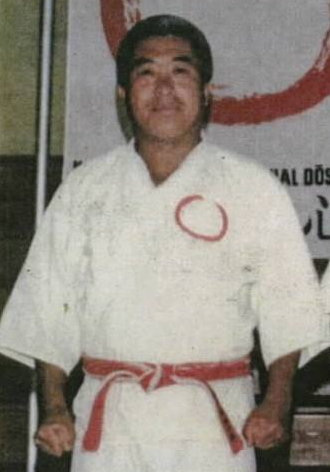
Ichikawa Isao (1935-1996)
Based on the information that is currently publicly available, it does not seem that Ichikawa Isao, himself, made any claims to knowing Channan, but he was purported to teach over 100 kata, many of which were his own creations. Instead, the claims of Channan being passed down in his lineage seem to have only arisen after his death, and while that does not mean the claims are without merit, it does make them difficult to verify, as it is not possible to ask Ichikawa, himself. It could be that the Doshinkan holds documentation, of some sort, which will provide support for these claims, but at this time, no such documentation has been shared publicly. What we do have publicly available are the names of a number of other karateka who trained with Toyama Kanken, thanks to a list featured in Karatedo Dai Hokan. While most of the people listed are very difficult to find information about, one would expect that at least a few of them would have passed on Channan, preserving it in their lineage of Toyama’s karate, but that does not seem to be the case. Two notable students of Toyama for which we can find information are Hiroshi Kinjo and Higa Seitoku (1921-2006), who were both well-known and reputable instructors, and it seems that neither man passed on this Channan kata, despite both being known for making efforts to preserve historical karate material. It seems unlikely that only one of Toyama’s students would have learned this supposedly long, complex, and historically significant kata, and if more than one of his students learned it, we should see multiple examples of it in various lineages, but we do not.
CONCLUSIONS
By considering all of these factors and theories, the simplest and most logical conclusion we can draw is that Channan was simply the name that Itosu Anko originally used for the kata that would eventually become the Pinan kata—perhaps only the first and/or second of the series—and was likely derived from material he pulled from Passai, Kusanku, and Chinto, rather than being a unique, distinct kata of its own. This is supported by commentary from several of Itosu’s students, as well as analysis by a number of karate historians. Itosu Anko is accepted as the creator of the Pinan kata, and had many students, between his personal dojo and his school karate program, the vast majority of whom did not pass on a Channan kata. Even if Motobu Choki’s Shirokuma is based on Channan, this only suggests a connection to Pinan Nidan. Yabu Kentsu (1868-1940), who, notably, was a fairly early student of Itosu, and not fond of the Pinan kata, stated that “if you have time to practice Pinan, practice Kusanku, instead.” It stands to reason that if the Pinan kata were based on a Channan kata that was actually a long, complex, older kata, which could have come from China, that Yabu would have learned it, likely passed it on instead of the Pinan kata, and he would have said to practice Channan instead of Pinan, rather than Kusanku. The fact that he did not do these things seems to support the explanations of Motobu Choki, Mabuni Kenwa, Hiroshi Kinjo, and others, regarding Channan simply being the old name of Pinan, and Pinan being based on material from Passai, Kusanku, and Chinto. We can also do simple side-by-side comparisons of the Pinan kata and see that most of what they contain can, indeed, be found in those older kata. If Channan truly was an older, longer, complex kata, then we would expect to see a great deal more unique material in the Pinan kata, as multiple students of Itosu stated that there were not significant changes made between the Channan they learned and the Pinan that Itosu developed, and if it was a separate, older, longer, complex kata, then it seems most of it was redundant material. We also have no written documentation of Channan existing prior to students of Itosu discussing it, not even in the few accounts we have of martial arts demonstrations prior to World War 2, which list Seisan, Suparinpei, Naihanchi, Pinan, and Kusanku as all having been demonstrated at various times. Until verified documentation to the contrary is discovered and released, it seems the various theories about Channans origins have largely been settled.